Friday, 4 February 2011

DVD/Blu Ray Review: Buried


Fancy watching a 90 minute movie about a man trapped in a box? Possibly not and whilst Rodrigo Cortes’ ‘Buried’ got decent reviews when it arrived in the cinema last year, it didn’t strike me as the sort of movie I wanted to see in a darkened theatre with only the ever-present glow of everyone else’s mobile phones (damn you, British public!) to remind me I wasn’t stuck in a box too. I suppose it’s down to that primal fear we surely all have of premature burial, waking up in a coffin six feet under and with no way of getting out. Shiver... ‘Buried’ is easier to bear in the comfort of your own sitting room when you’ve got the option of making a cup of tea (if the mood takes you) when it all gets a bit tense and claustrophobic. Because, trust me, ‘Buried’ gets very tense and claustrophobic indeed...

Ryan Reynolds (soon to be seen as 'The Green Lantern' in the much-anticipated superhero flick) plays Paul Conroy, an undistinguished run-of-the-mill US contractor driving trucks in Iraq, who wakes up to find himself in a cramped wooden box buried somewhere in the desert with only an oxygen-consuming cigarette lighter and a half-charged mobile phone for company. How he got there, why he’s there and how the Hell he’s going to get out are what ‘Buried’ is all about and the ensuing ninety-odd minutes, spent entirely in the company of Conroy as his situation goes from bad to unbearable, are far more engrossing and buttock-clenching than you might imagine a movie which is basically a one-man show could possibly be.


Panic. That’s what I’d do. I bet you would too. So does Conroy, thrashing about, kicking and wailing and trying to force his way out of his box, despite the weight of the sand above bearing down upon his prison. But when he manages to regain his composure he sets about using the tools he has at his disposal to find out how he’s ended up in this situation and what he can do to free himself. It’s an extraordinarily bold concept for a 21st century movie where bang and flash rule and concept and performance take a distance back seat. It’s a credit both to Reynolds’ four-square characterisation of the everyman Conroy and Cortes focussed and unflinching direction that the film never flags, never drifts into sentimentality, never goes too far (although the sequence where something unwelcome squirms its way into the coffin does stretch credibility maybe just a bit too far and might have you shouting “Oh, hang on, this is too much...” at the screen) and, ultimately, never compromises the drama of its scenario. We’re with Conroy in that box right the way through the movie; there are no cheesy flashbacks, no cuts to his captor (a creepy, emotionless insurgent whose voice we hear over the telephone), no scenes of desperate rescuers battling to find him. It’s just Conroy, alone and scared, phoning random numbers – his family, the FBI, his employer (one of the iciest scenes in the movie has Conroy talking to someone at his workplace who is recording the conversation purely to clear his company for any insurance liability for his predicament) – in at attempt to make contact with someone – anyone – who can help him. Most terrifying of all is the voice of one would-be rescuer who sounds horribly like Simon Cowell – and that’s a voice you never want to hear, let alone when you’re trapped in a box and buried in the desert.

‘Buried’ becomes a genuinely heart-stopping race against time as an above-ground bombing raid designed to smoke out Conroy’s captor fractures the box and sand starts to pour in...Conroy has just minutes to make peace with himself but how close are his rescuers to finding and saving him? I’ll say no more...

‘Buried’ is brave and unusual film-making and it works because Cortes knows exactly how to ramp up the tension and, crucially, how to use and exploit the confines of the box to create a real sense of unease and disquiet. Reynolds’ performance is remarkable too, and it’s no surprise to learn, from the special features on the DVD, that he really suffered for his art. Through his interaction with the outside world via the mobile phone we get to learn a bit more about his life and the fact that he’s clearly just a man, an unexceptional, ordinary Joe Schmoe, not even a soldier involved in the ongoing conflict, makes his predicament even more real and even more horrifying. In some ways it’s not easy viewing, it’ll make you uncomfortable and uneasy. And when it’s over you might want to go outside for a bit just because you can. ‘Buried’ is bold, original film-making – and in an era of ongoing ‘Transformer’ and Jason Statham films, it’s the sort of movie we really need to be glad are still capable of being made.

THE DVD/BLU RAY: Blu Ray gives the movie a pinpoint clarity, essential when so much of the action takes place in the dark or in half-light. Added features are minimal but there’s a decent ‘making of’, and interview with the director and a commentary.

'Buried' is available on DVD/Blu Ray in the UK on 14th February 2011

Looks Who's Filming..!


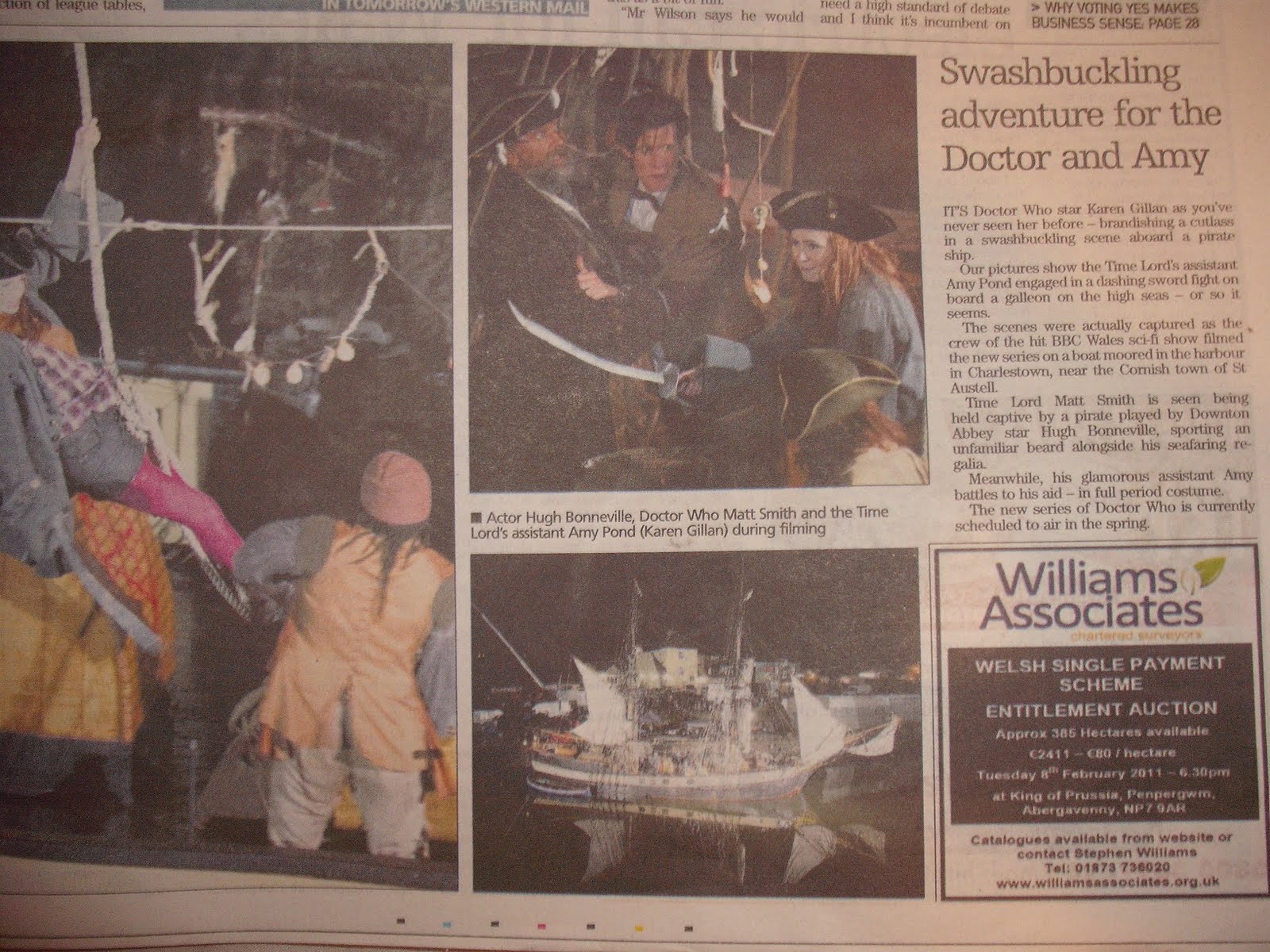
With 36 new episodes of Dr Who-related TV goodness winging our way in 2011 (14 Dr Whos, 10 Torchwoods, 12 Sarah Janes) it's hardly surprising to hear that filming is proceeding at a pace on the first two titles (Sarah Jane already has six season five episodes in the can with another six to film later this year). Naturally the UK press are interested and the local Welsh press is regularly reporting on the comings and goings of the filming crews as they wander around South Wales. But both shows are moving further afield this year; Torchwood has shipped almost completely over to the US and there have already been reports of filming in and around los Angeles, with much mroe to come. But the crew are spending a few weeks in the show's homeland - Stuff was briefly present earlier this week at the Coal Exchange where a group of ambulance speeding away from the building which, for the purposes of the story, is now a hospital. Kai Owen (Rhys) rushed over to have a word with gawping onlookers (Stuff would never knowingly gawp) and Eve Myles (Gwen) and Tom Price (Sgt Andy Davison) arrived just as Stuff could brave the biting cold no longer. Meanwhile, thanks to an infusion of cash from BBC America, Dr Who has been venturing further afield than its usual rundown South Wales industrial estates and quarries with the crew having already filmed in Utah for the opening two-parter of the next series. At this very moment the show's filming near St Austell in Cornwall for what sounds like a romping pirate episode (currently slated as episode three) guest-starring Downton Abbey's Hugh Bonnevvile. Welsh newspapers have taken notice and reported on the filming for both series (see below - click to embiggen) and the Tube of You's is home to a brief clip of the Dr Who Cornwall filming. Knock yourselves out.


In other Dr Who news, long-time fan David Walliams (Little Britain, Come Fly With Me) has revealed on the Chris Evans Radio 2 Breakfast Show this morning that's he's accepted a role as "an alien" in an episode to be filmed in "the next few weeks." Dr Who returns with the first half of season six in April.

Stuff coming soon: Marchlands, Primeval, Being Human, Outcasts, Bedlam and more...

Sunday, 30 January 2011

Book Review: Wiped! Doctor Who's Missing Episodes


One of the greatest frustrations of being a ‘Doctor Who’ fan – apart from other ‘Doctor Who’ fans – is the fact that there are currently 108 episodes of the long-running sci-fi classic missing from the BBC’s archives. The show, like many others from the 1960s, fell victim to the Corporation’s policy of selectively purging its own broadcast history due to reasons of space (it was considered impossible and impractical to keep copies of everything the BBC made, particularly during the ‘60s and ‘70s when volume of output was increasing) and cost (the videotape on which programmes were recorded was prohibitively expensive and it was considered more cost-effective to wipe and reuse). Incredibly, by 1975 (recent memory as far as Stuff is concerned), the master tapes of all 253 black-and-white ‘Doctor Who’ episodes had been wiped along with over half of the more recent Jon Pertwee episodes. How this could possibly have happened – and the extraordinary work done by a group of dedicated (some might say obsessed) fans to recover and restore as much of this precious material as possible – is told in ‘Wiped! Doctor Who’s Missing Episode’, a fascinating and sometimes eye-wateringly detailed new volume from Telos, publishers of specialised ‘Doctor Who’ and genre material.


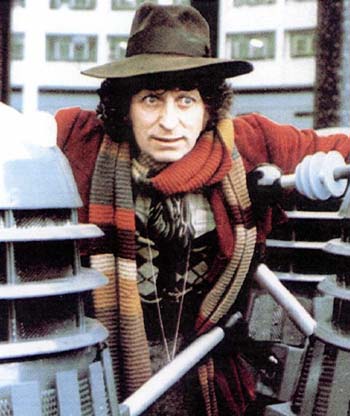
It was in 1981, when an edition of the ‘Doctor Who’ Magazine published an interview with the BBC’s then-Archivist alongside a list of which episodes of the series were no longer in existence, that the majority of the show’s fans became aware of how much of its heritage had gone, apparently forever. Like a bunch of science-fiction detectives these fans began to dig a bit deeper, to find out how and why this had happened and, with the BBC eventually on board as they’d finally realised they’d inadvertently destroyed something culturally significant, sent out calls all across the world – to film collectors, fans and, most importantly, all the overseas TV stations known to have purchased old ‘Doctor Who’ episodes in the past. The search was on to recall anything hidden in foreign TV archives or secreted away in private film collections. As a result, the gaps in the Archive began to be filled as episodes were recovered (most famously from Hong Kong when the long-lost 1967 serial ‘Tomb of the Cybermen’ was returned in 1992) or discovered in the most bizarre places (history’s now not clear regarding the finding of two episodes of ‘The Daleks’ Master Plan’, said to have been found in the basement of a Mormon Unification Church in London, the actual location of which remains a mystery of modern researchers). Other episodes were returned from as far afield and far apart as Cyprus, Nigeria and even New Zealand. One particularly-zealous researcher even managed to scour the Archives of ABC in Australia and located a series of brief sections edited from 1960s ‘Doctor Who’ episodes by the station’s censors. Perhaps the most hair-raising anecdore on ‘Wiped!’ is the tale of how notorious and sometimes-controversial ‘Doctor Who’ enthusiast/record producer Ian Levene, interested in buying private prints of classic ‘Doctor Who’ years before the BBC even considered commercially exploiting their Archive (and years before the arrival of home video, to be fair) arrived at the Corporaiton to find all seven episodes of the 1963/4 serial ‘The Daleks’, which introduced Terry Nation’s legendary creations to the British public, bundled together and labelled for imminent junking. Let’s think about this for a second. The Daleks had become a phenomenon in the 1960s, probably the first big commercial and merchandised success of the TV age; surely by virtue of this alone their episodes had secured their place in any TV archive, especially their very first appearance. Apparently not; the BBC’s policy of junking programmes two years after broadcast (sometimes sooner – some Troughton serials were wiped after a few months!) was ruthless and paid no heed to historical importance. What's even more astonishing is the fact that, in 1975, just as Tom Baker was taking over as the fourth Doctor, destined to take the show to new heights of popularity, well over half of his predecessor Jon Pertwee's colour episodes had already been consigned to the dumper; fortunately the damage wasn't quite as permanent as episodes were quickly recovered and restored from abroad but even today there are a handful of Pertwee episodes which exist only as raw black-and-whtie prints (for overseas broadcasters who were late in adopting colour TV) but which are currently undergoing gruelling, costly and time-consuming colour conversion processes in readiness for DVD release.


‘Wiped!’ is full of fascinating facts and is absolutely the definitive work on the subject of what’s gone and what’s been found in the world of ‘Doctor Who’. Author Richard Molesworth has done an extraordinary job in contextualising both the BBC and its policy in relation to junking its output and he’s identified and recognised the key players in the recovery of so much of this priceless material. Eyes may glaze over here and there as the author explains in intricate detail the various ways the BBC recorded and copied and preserved its material, eyes may roll at yet another list of the ‘state of play’ of the ‘Doctor Who’ Archive at any particular point. Moleworth’s enthusiasm leads to a bit of repetition in the text here and there; the anecdote recounting the response from Iran to a BBC enquiry about missing ‘Doctor Who’ episodes – “In the name of Allah, what are you talking about?” – was amusing the first time but the joke had worn off by the third time it was repeated in the text.

Minor quibbles aside ‘Wiped!’ is a massively impressive work and, considering its potential dryness (and there are some bits which are as dry as the desert), it’s surprisingly readable and entertaining. It’s hard not to admire the dedication and perseverance of the fans who, even today, are striving to find ‘Doctor Who’s missing history and ‘Wiped!’ deserves its place on the bookshelves of anyone with even the remotest interest in this ongoing search. It’s been some years now since the last ‘find’ of a missing ‘Doctor Who’ episode and as the years roll by, with new leads drying up and practically all the overseas Archives scoured, it’s beginning to look as if there are always going to be 108 missing episodes of the series. ‘Wiped!’ is a fitting testament to the work done by many people to ensure that it isn’t a whole lot more.

Coming soon to Stuff: Primeval, Being Human, Buried on DVD, The Listening Post with Adele and much more...

Saturday, 29 January 2011

DVD review: Dr Who - A Christmas Carol

Stuff was in no fit state to pass comment on the most recent ‘Dr Who’ Christmas Special ‘A Christmas Carol’ because Christmas itself was a bit of a write-off due to a bout of genuine, 100%, out for the count flu which meant the entire festive season passed by pretty much unnoticed. Fortunately the BBC have now issued said adventure on a shiny new DVD release which gives me the perfect excuse to watch it again and to finally marshall my thoughts on this most seasonable (yet) of ‘Dr Who’ adventures.


‘A Christmas Carol’ is, in many ways, the perfect example of showrunner/head writer Steven Moffat’s apparent perception of ‘Dr Who’ as a modern-day fairytale. Season five showed us the way the series was going. Moffat eased ‘Dr Who’ away from the urgent urban backdrop favoured by Russell T Davies and set it down in the quaint world of made-up English villages, legends of girls and boys who waited, ancient cosmic traps and deadly dreamscapes. Apart from the pre-title sequence of ‘The Eleventh Hour’ London barely got a look in (and neither did contemporary Earth, come to that). In retrospect, along with all the other changes Moffat brought to the series (new Doctor, new companions, new music, new titles, new logo, new TARDIS inside and out, new sonic and, most controversially, new fat Daleks) maybe the style of the show changed a bit too drastically. It’s all down to personal taste, of course. Many fans welcomed this routine to what they saw as a more traditional style of ‘Dr Who’ with Matt Smith playing a version of the character far more reminiscent of some of his earlier incarnations than either Christopher Eccleston or David Tennant, both of whom played the Doctor as a Modern Man, a Time lord of our times. Under Moffat we have a Doctor very much in the mould of Patrick Troughton, bumbling and vague and yet authoritative and wearing a ‘costume’ rather than the ‘clothes’ sported by his immediate predecessors. Other fans – casual fans as well as the hardcore – felt more at home with Davies’ domesticated Doctor, returning to Earth every now and again to visit his companion’s relatives, and racing around the streets tangling with soldiers and tussling with politicians. But ‘Dr Who’ should never rest on its laurels, it should always strive to change and stay one step ahead of the game (and its audience) and whilst Stuff sort of misses the easy edge Davies gave his series, Moffat’s episodes, despite obvious funding issues last year, have their own charm and appeal which, if reports on the work-in-progress forthcoming sixth season are any indication, look as if they may herald a pleasing combination of the old and the new.


So to ‘A Christmas Carol’ and here, more than anywhere else, we can see the difference between Davies and Moffat – at least in the way they approach the thorny subject of the big Christmas night episode. Designed to attract as many people as possible on the laziest TV night of the year, both men clearly understand that ‘Dr Who’ has to tell a straight-forward story, unencumbered by the weight of the show’s fifty-year mythology, because many of those watching may not be regular viewers, they may be tuning in because they’re just too bloated to turn over to watch ‘Emmerdale’. Davies rose to the Christmas challenge by writing big epic adventures – a giant spider-queen descending from the stars to awaken her long-dormant arachnid offspring, skull-headed aliens invading Earth in their rock-shaped spaceship, an alien facsimile of the Titanic sabotaged and plunging towards the Earth, a giant walking Cyberfactory stomping around Victorian London. Big bold stories, full of extraordinary visual images and mad ideas; not the stuff hand-wringing fans can tolerate or take seriously but ideal fare for a casual audience who just want to be thrilled on Christmas night. Moffat’s stance is slightly different; he goes all romantic. ‘A Christmas Carol’ is one of the oddest ‘Dr Who’ adventures in the show’s long and twisty history (its twistory, if you will...and you probably won’t). With the Doctor#s newly-wedded chums Amy and Rory honeymooning on a space-cruiser plunging to destruction, the Doctor battles not cyborgs or robots or space-lizards – but he battles against Time to change the heart of a lonely and bitter old man, the one man who can save his friends and the 4,000 other people on board the space liner.


Curiously, ‘A Christmas Carol’ is an episode almost entirely without peril of jeopardy. Yes, the Doctor encounters a giant shark but it’s an encounter that’s over and done with in thirty seconds and we never really think the Doctor’s in danger. Only the irritating Amy (absent from much of the episode) and her cliched bumbling, brow-breaten husband Rory are in danger and we never really believe for a moment there’s not going to be a last minute rescue. Moffat occupies the sixty minutes in between the title sequences by fashioning a charming, if slight, story which takes its cue from Dickens but is full of all those time travel paradoxes and smart-mouth dialogue which the writer seems obsessed with. It all makes for a schizophrenic episode which is by turns frustrating and yet heart-warming. I still have issues with Moffat’s writing now he’s the Boss man of ‘Who’; he’s cast a truly astonishing actor in Matt Smith – watch him, just watch him, the way he acts with his face, his body, he’s always acting, he’s always inhabiting this character – but he doesn’t really seem to know what do with him other than get him to spurt silly comic catchphrases: “[insert item of clothing here) is cool!” or else ramble incoherently and insensibly. Matt’s not been given his defining episode yet, the episode where he really makes his mark, the episode where the audience finally sits up and goes “Wow, he’s really good!” He shines and glows and excels all the way through ‘A Christmas Carol’ but it’s hard not to feel that all the hard work done by his predecessors in making the Doctor real and believable is being chipped away by jokey references to Frank Sinatra and wedding to Marilyn Monroe. Maybe it’s the way Moffat wants it, but the Doctor’s becoming a fantasy figure again, and too much of his dialogue has become trite and silly, vehicles for gags-for-gags sake rather than to establish a firm character or any motivation for the latest Doctor.


Ongoing series quibbles aside then, and taken at its own face value, ‘A Christmas Carol’ is an accomplished and impressive piece of TV. Yes, the story is something and nothing but it looks absolutely stunning, banishing any lingering memories of some of last year’s cash-strapped adventures (invisible aliens, pensioners on zimmer frames, lazily-reused monster costumes for the finale) with some astonishingly sumptuous sets from the show’s new resident set designer Michael Pickwoad. Guest stars Michael Gambon and Katherine Jenkins are good value too. Gambon’s miserly Kazran Sardick is mean and cruel but we never see him as evil and he’s never really painted as the ‘bad guy’; once the Doctor sets off on his mission to change the man so he can save his friends (a long-winded way of going about it) Sardick slowly thaws just as his erstwhile girlfriend Abigail Pettigrew (Jenkins) is thawed every Christmas past for a moment or two of happiness with the younger Sardick. Considering this is Jenkins’ first acting role she acquits herself well but of course her vocal skills are called into play in a couple of musical sequences. Here, in the last ten minutes, is where ‘A Christmas Carol’ changes from being a rather sluggish, wordy drama about love and redemption and blah-de-blah into something very spine-tingling and very special indeed. My spine is, in fact, tingling at the very thought of the sequence where Abigail, Sardick gazing adoringly at her, sings into the remains of the Doctor’s shattered sonic (don’t ask) and guides the space cruiser in to a safe landing. Murray Gold, who provides a stunningly- atmospheric score for the episode, works some real magic here with a beautiful, haunting song (available soon on the episode’s soundtrack CD) brought to life by director Toby Haynes’ inventive camerawork. Crane shots, the camera circling Gambon and Jenkins, the people of Sardicktown spilling into the streets as snow falls, the Doctor and young Sardick slipping away into the TARDIS, the Doctor’s face alive with joy of a job well done...it’s very probably, oddly, my favourite sequence of ‘Dr Who’ since it returned in 2005, an evocative and emotional scene, all underscored by Jenklins performing that song. It all serves a scene that reminds you (or at least it certainly reminds me) that whatever creative ups and downs ‘Dr Who’ enjoys and endures, this is still the best show on the box by a country mile.

‘A Christmas Carol’ is a curious beast then. It’s full of magic (the flying shark skyride is another visual highlight) and yet at times it seems plodding and pedestrian. It certainly doesn’t have the ‘oomph’ we’ve come from expect from ‘Dr Who’ at Christmas and yet when it comes alive it lives and breathes in ways only this series can. Pleasingly, over 12 million people were on board from ‘A Christmas Carol’, further proof, if it were needed (and there were those who thought it was) that ‘Dr Who’ remains one of the nation’s favourites. Let’s hope Moffat’s put away his Bumper Book of Fairytales for now and that he and his can team can deliver a big, bold, exciting series for 2011 which concentrates less of his obsessions with ‘timey wimey’ and more on romping adventures. Time, as ever, will tell...

THE DVD: Although ‘A Christmas Carol’ runs for just over sixty minutes the DVD is good value, featuring as it does the full-length BBC3 behind-the-scenes ‘Confidential’ and, better yet, a slightly-edited 60 minute version of the 2010 ‘Dr Who’ Prom from the Royal Albert hall, showcasing some of the very best of Gold’s music and with guest appearances from Smith, Gillan and Rory Williams and a host of familiar beasts prowling the aisles and terrifying the tots. The highlight here is the ‘surprise’ in-character appearance of Smith, revelling in his interaction with the audience, particularly an overawed young kid whom Smith selects from the crowd to help him with his bit of nonsense. Pretty much an essential DVD for the completist.

Sunday, 16 January 2011

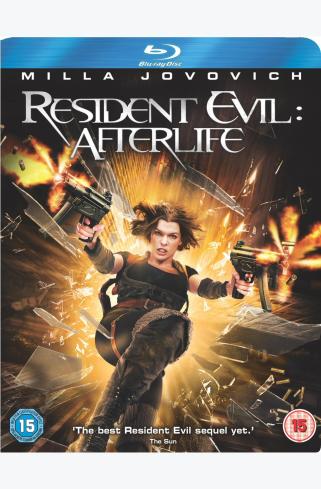
DVD Review: Resident Evil: Afterlife


I wouldn’t go as far as to say that I’m a fan of Paul WS Anderson’s ‘Resident Evil’ movie franchise, based as it is on some computer game series which I’ve never played and never will. But I’ve always tended to support the underdog and, in the face of constant derision from sniffy critics, I have to say I quite enjoy the films in an utterly mindless, undemanding sort of way. They’re not art but they’re not supposed to be. They are what they are – and they’re solid, spectacular, action-packed adrenalized sci-fi films which may not be as important or ground-breaking as the likes of ‘Inception’ but they’re a damn sight more fun to watch. So there.

‘Afterlife’ is the fourth entry into what now appears to be an endless series of movies. Released on 3D in the cinemas (even on 2D it’s easy to see where the 3D sequences were – things fly towards the screen or imbed themselves in walls next to people – but, as usual, the film loses nothing when viewed in 2D) the movie picks up where the previous entry ‘Extinction’ left off (at least, I have to assume so. It’s the way of the ‘Resident Evil’ movies that you tend to forget them the moment you’ve watched them – all I can really remember about ‘Extinction’ is that Ali Larter was in it and there were zombie crows – zombie crows!!!) Anyway, after an explosive action sequence which sees the destruction of the Umbrella Corporation headquarters in Japan (Umbrella being the evil organisation which, you’ll surely recall, unleashed the dreadful T virus which caused the zombie apocalypse which remains the backdrop to the series) the genetically-augmented Alice (Mila Jovovich), no longer augmented when she’s deprived of her preternatural agility and strength (although the film seems to forget this a bit later on when it’s balletic-fight-sequences as usual, but hey-ho) is flying solo in search of a sanctuary known as Arcadia which is believed to be in Alaska. It isn’t. But Alice is reunited with Claire (Larter) who can’t remember how she found herself alone in Alaska and together the two set off to try and pick up the trail of Arcadia and eventually they find themselves in a devastated Los Angeles which is crawling with zombies. In an abandoned prison complex are a handful of other desperate survivors. Arcadia – it turns out to be a refugee a ship – is anchored just outside the city and Alice and Claire join forces with the group in the prison. But how are they to make their way to Arcadia when the prison is surrounded by zombies who are on the verge of breaking in?


That’s pretty much it for the plot – but then were you really expecting anything else? Every time a ‘Resident Evil’ pic arrives, whether it’s at the cinema or on DVD, the same old critics say the same old things. Of course it’s shallow, of course it’s nonsense....that’s sort of the point. Complaining about plot holes and poor characterisation in a film like ‘Resident Evil: Afterlife’ seems like just about the greatest example of utter futility imaginable. The truth is that the critics get a bit frustrated when films like ‘Inception’ come along and make their beloved sci-fi genre respectable again for a few weeks, and then ‘Resident Evil: Afterlife’ shows up like a gatecrasher at a party and brings the tone crashing right back down. In actual fact there’s never a dull moment in ‘Resident Evil: Afterlife’ (where there are several very long ones in ‘Inception’) and, for a film made with a fairly low budget, the visuals are really pretty astonishing. From Alice’s attack on the Umbrella Corporation’s hi-tech base in Japan, the burning, crumbling Los Angeles (the scenes of Alice’s little plane puttering over the devastated city are music to the eyes of an apocalypse fiend like Yours Truly) to the final shattering fight through the zombie hordes to the escape to Arcadia and its own horrors (I’ll just say...zombie dogs with heads which split open!) and the thrilling cliffhanger ending, the film’s visual palette is rich and never less than totally convincing.

Having suggested that films like this are just for watching and not really analyzing, it’s hard to ignore one or two niggles. There’s a slight longeur in the middle of the film after Alice and Claire arrive at the prison and Get To Know their fellow survivors, the new characters are just zombie fodder and it’s not difficult to work out which ones will be for the chop and which ones will be lucky to make it to the next reel. Still, good to see ‘Prison Break’ star Wentworth Miller back on the screen as Claire’s brother Chris (apparently a core figure from the game franchise...who knew??) and the rest of the unknowns in the cast do their best with the thin and stereotypical character stuff they’re given.


Obviously I’m on to a bit of a loser by even trying to defend the ‘Resident Evil’ series but if nothing else Stuff speaks as it finds. If you want a bit of spectacle, a few zombies, some gore, some mad fight sequences and OTT CGI allied with a slight plot and paper thin, perfunctory characters – and sometimes that’s enough – and you’re willing and able to suspend your critical faculties for ninety-odd minutes, ‘Resident Evil: Afterlife’ will fit the bill. Yes, it’s nonsense and yes it’s disposable but ultimately it’s fun, it’s exciting and it’s entirely forgettable. It’s certainly not as offensive as the reviews would have you believe so set aside your prejudices, ignore the prejudices of the jaded reviewers, and give this one a spin. It’s as good a way as any of blowing away those New Year cobwebs.
THE DISC: Terrifically sharp Blu Ray image and, as usual, it’s the BR purchasers who get the best deal with a string of featurettes alongside the director commentary. DVD buyers get a handful of features and the commentary.

Sunday, 9 January 2011

Hello?? Anybody still there...?

Hello? Yoo-hoo... Ahem. What can I say? Has it really been that long? Nearly six weeks since my last post. Inexcusable in most circumstances but I have a note! Well, I don't actually have a note just an explanation for Stuff's prolonged absence. I've been pretty much poleaxed by a dose of winter flu - proper flu, too, not man flu or a bit of a sniffle - a real doozy of a virus which devastated my immune system and left me lying around the place like some sort of limp dishcloth. Or something. Christmas, whilst not cancelled, could have been perkier. Upsides; better now, lost a stone in weight. Downsides; everything else. But Stuff will be back on track shortly with the usual mix of news and reviews including Stuff's verdict on the terribly disappointing new series of 'Primeval' (it is, you know it is), a belated look at Michael Jackson's 'new' CD, reflections on the 'Dr Who' Christmas Special and more. Don't go away, normal service is about to be resumed....

Tuesday, 30 November 2010

Picture special: Dr Who and the Radio Times

Almost as traditional by now as the ratings-bustin' Christmas night episode of 'Doctor Who' is the just-before-Christmas edition of the esteemed Radio Times which tends to boasts a glorious pictorial cover previewing the episode and an inside feature just to whet the appetite. With December issues of Radio Times appearing almost daily at the moment in the rush to get to the Christmas double edition it's hard to keep up with what's out when but the issue appears to be hitting the shops on Thursday 2nd December and here's a preview of the cover to keep an eye out as you scan the shelves at WH Smiths (other newsagents are available...but not many)